



The year 2025 marks a turning point in Canadian immigration policy, shifting focus toward sustainable growth, in-Canada transition, and targeted economic needs. Immigration, Refugees and Citizenship Canada (IRCC) introduced a series of significant adjustments, notably freezing Permanent Resident (PR) targets and, for the first time, setting explicit targets for new Temporary Resident (TR) arrivals.
Here is an overview of the key changes implemented in 2025
📉 Immigration Levels and Targets: The New Normal
The 2025-2027 Immigration Levels Plan, announced in late 2024, signaled a clear shift towards managed, sustainable growth by adjusting targets and introducing caps on the temporary resident population.
| Change | Date Implemented / Announced | Details |
| Permanent Resident (PR) Target Reduction | Announced October 24, 2024 | The overall target for new PR admissions was set at 395,000 for 2025. This represents a significant decrease from the previous year’s planned figure, prioritizing stability over continuous growth. |
| Introduction of Temporary Resident (TR) Targets | Announced October 24, 2024 | For the first time, IRCC set a target for new TR arrivals in 2025 at 673,650. The overarching policy objective is to reduce the share of temporary residents to 5% of the total Canadian population by the end of 2026. |
| New International Student Cap | Effective January 24, 2025 | The annual cap on new study permits for 2025 was set at 305,900. This reflects a national strategy to manage rapid growth in the International Student Program. |
| Francophone PR Targets Increased | Announced October 24, 2024 | The target for French-speaking PR admissions outside Quebec was raised to 8.5% of all PR admissions in 2025, with a goal of 10% by 2027. |
🚀 Express Entry System Updates: A Focus on Human Capital
The Express Entry system underwent a major structural change in early 2025, removing the value of a job offer in the Comprehensive Ranking System (CRS) and refining the scope of category-based selection.
| Change | Date Implemented | Details |
| Removal of CRS Points for Job Offers | Effective March 25, 2025 | IRCC officially removed the 50 or 200 CRS points previously awarded for an Arranged Employment Job Offer (supported by an LMIA). This change was implemented to combat fraud and emphasize core human capital factors (skills, language, education). |
| New Category-Based Selection Focus | Announced February 27, 2025 | The categories for targeted draws were updated for 2025 to focus on key labor shortage areas, adding Education Occupations as a priority. The key categories for 2025 draws are: French-Language Proficiency, Healthcare and Social Services Occupations, Trades Occupations, and Education Occupations. |
🎓 International Student and Work Permit Changes
Reforms to the International Student Program (ISP) continued in 2025, impacting financial readiness and work permit access for families of temporary workers.
| Change | Date Implemented / Announced | Details |
| Increased Financial Requirement for Study Permits | Effective September 1, 2025 | The minimum required amount an applicant must demonstrate to cover living expenses was raised to $22,895 (for a single applicant, not including tuition or travel costs), ensuring applicants are better prepared for the cost of living. |
| Restrictions on Open Work Permits for Family of Workers | Effective January 14, 2025 | Restrictions were tightened, generally limiting Open Work Permit eligibility for spouses and dependents to those whose principal applicant holds a work permit in a high-skilled occupation (TEER 0, 1, 2, or 3). |
🗺 New Pathways and Programs
New and transitional programs were announced to support specific demographics and regional needs.
| Change | Date Implemented / Planned | Details |
| New Caregiver Pilot Programs | Launched March 2025 | New pilots are expected to replace the expired Home Child Care Provider and Home Support Worker Pilots, focusing on providing Permanent Residence (PR) upon arrival and enabling workers to work for organizations providing temporary or part-time care. |
| Citizenship by Descent Modernization (Bill C-3) | Bill C-3 received Royal Assent on November 21, 2025 | This legislative change addresses the “first-generation limit” on citizenship by descent, providing a path to citizenship for individuals born outside Canada to a Canadian parent who was also born abroad (often referred to as “Lost Canadians”). |
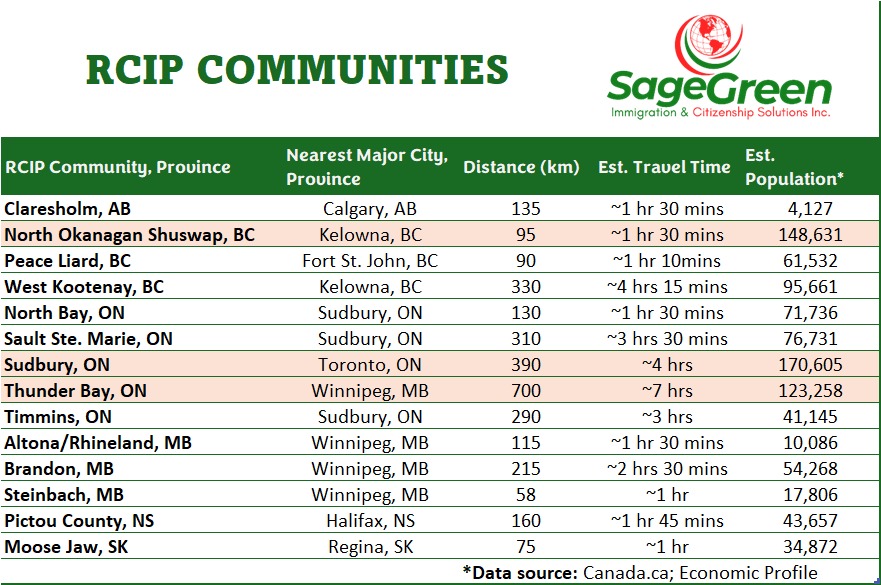
| Rural and Francophone Community Immigration Pilot | Launched in 2025 | A new rural pilot focused on attracting and retaining French-speaking skilled workers in Francophone minority communities outside of Quebec, supporting the 8.5% PR target. |
The changes in 2025 signify a new phase in Canadian immigration, prioritizing a more selective, targeted, and sustainable approach to manage population growth and align newcomers with Canada’s long-term economic strategy.
Do you have any questions about a specific program, such as the new Express Entry categories or the new Caregiver Pilots?
Latest Post

December 15, 2025
December 1, 2025
The Great Recalibration: Canada’s Major Immigration Changes in 2025
November 7, 2025